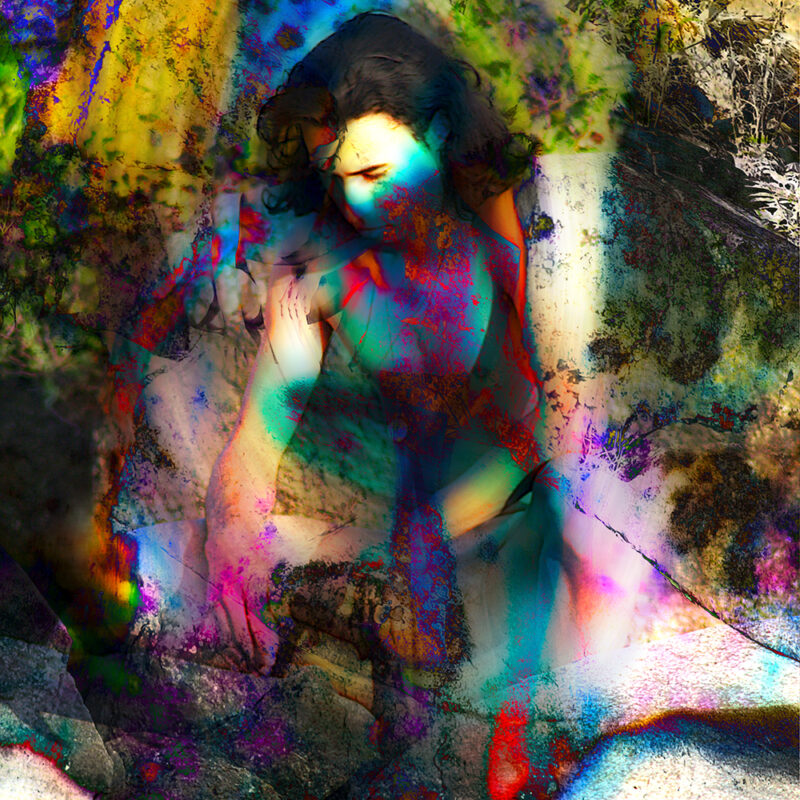
Within the vast cathedral of consciousness exists a chamber without words—a sacred space where experience flows unmediated by language. These ineffable inner moments arrive like visitations, impossible to translate yet undeniably real. I find myself wandering these wordless corridors and wonder: do you walk them too? Do all humans navigate these strange territories where language falls away, leaving only pure perception?
The garden of neurodiversity—from subtle variations to profound departures from the neurological mean—seems to shape these wordless realms uniquely for each traveler. Some minds might experience these alinguistic states with blinding intensity, others as gentle whispers. These thought-forms arise not from vocabulary but from the brain’s direct communion with sensory reality—kinesthetic wisdom, visual intelligence, the forgotten language of scent and taste. They are ancient signals from a time before words, electrical constellations blooming in the dark matter of thought.
What purpose do these wordless knowings serve? Why has evolution preserved these strange spaces where language cannot reach? Perhaps they are nature’s bridge between conscious and unconscious awareness, the mysterious crossroads where instinct meets intellect. Perhaps they explain our persistent hunger for mystical experience—our desperate need to believe that something exists beyond the prison of words we’ve constructed around ourselves.
Throughout history, humans have created elaborate systems to interpret these wordless experiences. We’ve consulted oracles and prophets, seeking external validation for internal mysteries. We’ve listened for the small voice from the shadows of consciousness, hoping it might bear messages from beyond. We’ve chanted mantras to ourselves, trying to bypass the chattering mind and return to that wordless center.
This hunger for meaning beyond language creates a perfect hunting ground for those who would exploit it. The landscape of spirituality becomes populated with slick-haired prophets selling certainty, with gurus promising access to the ineffable for the right price. Television hosts with practiced sincerity hawk crystals that supposedly capture energies our words cannot describe. They recognize our desperate need to understand these wordless experiences and offer us language for sale—prepackaged explanations that diminish mystery into marketable wisdom.
Yet beneath these exploitations lies a truth worth considering: perhaps our attraction to mysticism stems from an authentic recognition that there are realms of experience language cannot touch. We sense the vastness of consciousness beyond our linguistic boundaries and yearn to explore it. The mistake is not in recognizing these wordless territories but in believing that someone else’s map can guide us through them.
What if, instead, we honored these ineffable experiences as they are—as wordless wisdom unique to each nervous system? What if we understood that the very absence of language might be their most precious quality? Perhaps in these silent chambers of consciousness, we find not messages from beyond but forgotten messages from within—the body’s ancient knowledge, the mind’s unmediated perception, the heart’s untranslated truth.
In a world drowning in words, perhaps the mystical impulse is simply our recognition that some aspects of being human will always transcend language—and that this transcendence is not a problem to solve but a mystery to honor.